
As CEO of Red2Green, the headlines this week made my blood boil, just as they did for many of our staff and learners. On Monday, President Trump described the rise in autism diagnoses as a “horrible, horrible crisis” and linked it to women taking Tylenol during pregnancy. His Health Secretary, Robert F Kennedy Jr, promised to find the “cause” of autism in just a few months.
This felt like a step back decades. These remarks suggest that autism is a tragedy and that mothers are to blame. Parents already spend so much of their lives fighting systems for their children, whether for diagnosis, education, healthcare or understanding. To then hear that they are being blamed for their child’s condition is beyond cruel. I have seen the impact of this kind of messaging first-hand. Parents carry guilt they should never have been made to feel, and autistic people are treated as though their lives are less valuable.
Our learners at Red2Green had their own reactions:
- “I’ve heard this type of thing before from Trump – I ignore him.”
- “I ignore anything he says. I’m not concerned at all by him.”
- “I can’t believe anything he says, or anything politicians say.”
- “The trouble is he’s implying autism is an inherently negative thing.”
The resilience in these responses makes me proud, but the fact they even have to tune out harmful comments is telling. No one should need to filter out world leaders just to feel safe in who they are.
Why harmful claims hurt real people
Blaming parents or spreading fear does not help anyone. The National Autistic Society called Trump’s remarks “anti-science and irresponsible” and I agree. We know misinformation can put pregnant women at risk and it undermines autistic people by suggesting their condition is something to be prevented.
The science does not support Trump’s claims. A large US government-funded study found no increased risk of autism following prenatal exposure to acetaminophen (paracetamol/Tylenol) (CBS News). A major Swedish study of 2.4 million children published in 2024 also found no relationship between Tylenol use in pregnancy and autism (Financial Times). The US Food and Drug Administration has been clear: while some studies suggest a possible association, no causal link has been established and there are contradictory results in the literature (FDA).
I also noticed the conversations happening online. The Autistic Girls Network highlighted the Swedish study and reminded us that autistic people are part of natural human diversity.
Spectrumy explained it in a way that cut through the noise. Yes, autistic mothers may be more likely to take Tylenol, but that is because autistic people often have higher rates of chronic health conditions, and people with chronic health conditions are more likely to use pain relief. Correlation does not equal causation. And chronic health conditions in autistic people is a whole other discussion, don’t get me started!
This is the humanity that gets lost in headlines. Behind the data are real lives and communities who deserve respect.
Awareness makes the difference
At Red2Green, raising awareness has always been central to what we do. I speak regularly at Women’s Institutes and community groups where questions often come up like “is autism on the rise?” or “what causes autism?”. The truth is that diagnoses are rising because there is better understanding, wider criteria and less stigma, not because autism itself is suddenly more common.
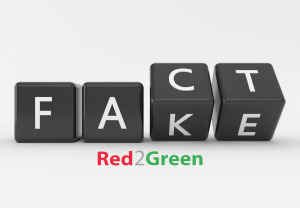
A few years ago, our learners worked together to create a set of myth-busters. One of the most important was:
Myth: Neurodiversity such as autism or ADHD can be cured
Fact: Neurodiversity is a natural variation in the way brains function. There is no cure, but with the right support any challenges can be managed, and autistic people can thrive.
These resources remain powerful today, and they show that autistic people are the best voices to counter myths.
Where our focus should be: breaking down barriers
The real crisis is not autism. It is the barriers society puts in the way. From workplaces that are not accessible to education systems that are too rigid, too many autistic people are excluded from opportunities.
At Red2Green, we are working to change that. Our Aspirations programme supports autistic adults across Cambridgeshire to gain skills, independence and confidence. Through Encompass, our workplace training, we help employers understand how to support autistic staff and build cultures where everyone can succeed.
Autism is not something to fear. It is part of who people are. Our task as a society is not to find someone to blame, but to make sure autistic people are valued, supported and able to thrive.
Further Reading
- National Autistic Society – Causes of Autism: https://www.autism.org.uk/advice-and-guidance/what-is-autism/causes-of-autism
- NHS – Autism overview: https://www.nhs.uk/conditions/autism/
- US FDA – Statement on acetaminophen use in pregnancy: https://www.fda.gov/news-events/press-announcements/fda-responds-evidence-possible-association-between-autism-and-acetaminophen-use-during-pregnancy
- CBS News – Medical experts respond to Trump’s claims: https://www.cbsnews.com/news/trump-autism-tylenol-medical-experts/
- Financial Times – UK response and Swedish study: https://www.ft.com/content/81b00ea0-273a-4a6d-b3d3-9e84a66dad8f